Web development built to perform.
Web development at Nifty Websites Australia is the technical build of fast, secure, scalable websites and web apps on platforms such as WordPress, WooCommerce, Shopify and custom full-stack. We build to spec, integrate the tools you use, and ship a complete SEO build with every project.
on every website, free.

Built on the platforms you trust



Sites and apps built to spec.
Fast and lightweight
Lean builds that load quickly, because speed drives both conversions and rankings.
Secure by design
Hardened, well-maintained builds so your site and your customers stay protected.
Integrations and features
Bookings, payments, CRMs and custom functionality connected to how you work.
Where would you like to start?
We build on the right platform for your project. Pick the path that fits.
- WordPress DevelopmentFast, secure, easy-to-edit WordPress sites with custom themes.
- WooCommerce and ShopifyOnline stores built to sell on either platform.
- Full-Stack DevelopmentCustom websites and web apps, front end to back end.
From spec to a site that performs.
Discovery
We learn your business, your customers and the searches that matter, then agree the goals for the site.
Design for approval
We design a mobile-first concept built around conversion and your brand, for you to approve before we build.
Build and free SEO
We build fast and secure, then add the complete SEO build, content, schema, technical setup and analytics.
Launch and support
We go live, connect tracking, and back you with Australian support and optional care plans.
A recent website we designed & built.
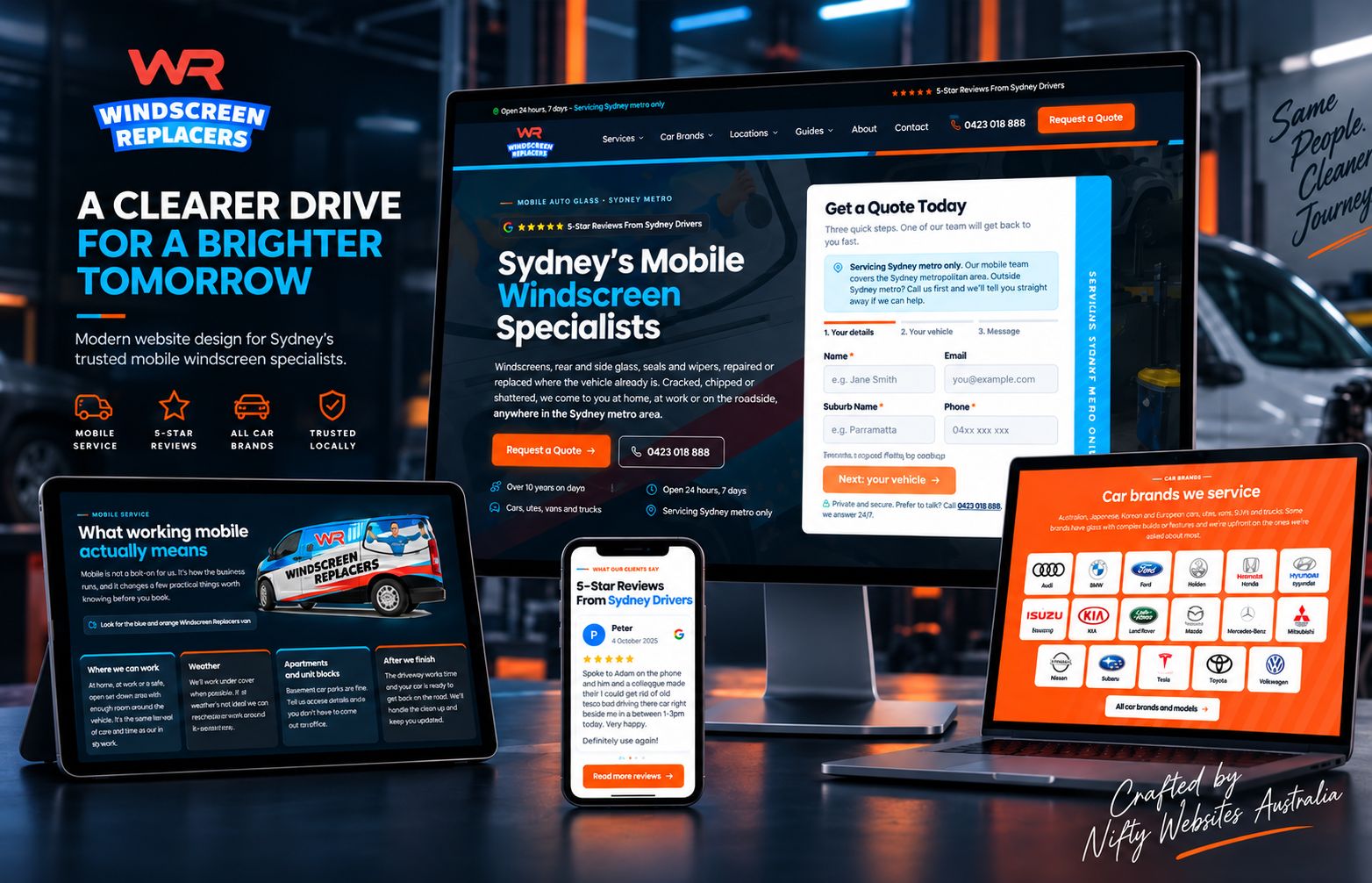
Amazing Website, Amazing Results , we are thrileled with the design and strategy to get us leads and people love our website when they use it or see it, love it! - Eddie & Wassim
★★★★★ customer review
Development done properly.
Scope and pricing are confirmed in your free quote.
- The right platform for your projectWordPress, WooCommerce, Shopify or custom.
- Fast, secure, maintainable buildMade to spec and built to last.
- Integrations with your toolsBookings, payments, CRMs and more.
- The complete SEO buildSo the site ranks from launch.
- Australian team and supportReachable people, plus optional care plans.
Web development, answered.
What is web development?
Web development is the technical build of a website or web application, covering the front end a visitor sees and the back end that powers it. At Nifty Websites Australia every build is fast, secure and made to spec, with a complete SEO build included.
Which platforms do you develop on?
We develop on WordPress, WooCommerce and Shopify, on our own fast Nifty platform, and with custom full-stack code when a project needs it. We choose the platform that best fits your features, budget and how you want to manage the site.
Can you integrate the tools we already use?
Yes. We connect the systems you rely on, such as booking tools, payment gateways, CRMs and email, so your website works with the rest of your business rather than in isolation.
Is SEO part of the development?
Yes. Every development project ships with a complete SEO build, so the site is fast, crawlable and set up to rank from launch rather than optimised as an afterthought.
Get your free web development quote.
Tell us about your project and we will come back with a fixed price and honest advice. No obligation.
Ready for a website that performs?
Get a free, no obligation quote with the $2,000 SEO build included on every website we make.