
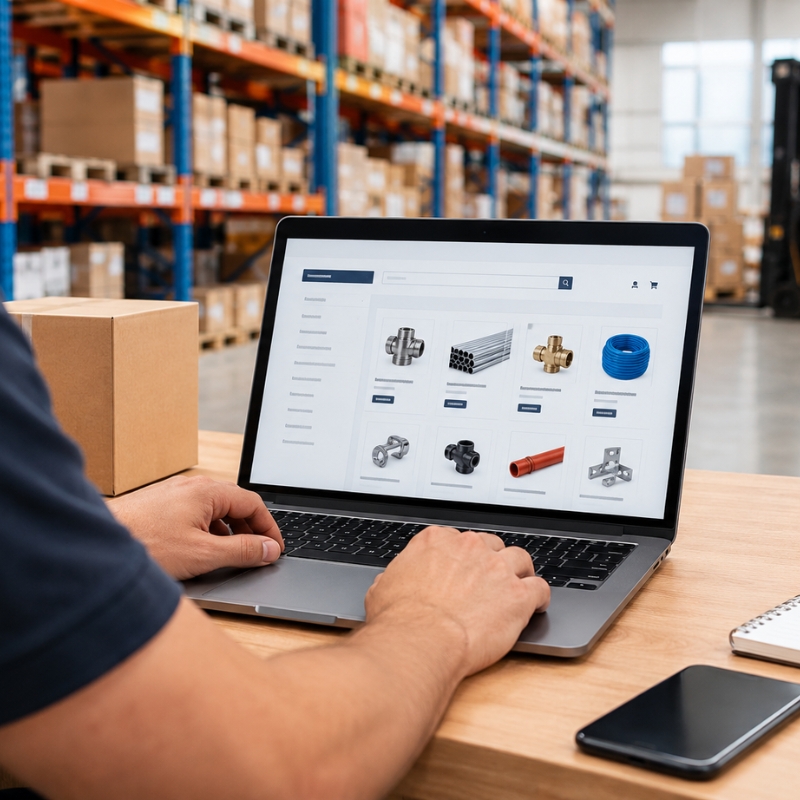
If you're a wholesaler or B2B supplier scoping a new website, you'll quickly find that what worked for a retail shopfront doesn't quite fit trade selling. B2B buyers have different needs, and a website that ignores them leaves orders on the table. At Nifty Websites Australia, we build B2B and wholesale websites for suppliers across Australia, and this guide explains what makes a wholesale site different, the features trade buyers expect, whether to sell online or take quote requests, and what drives the cost, so you can scope a site that actually supports how you sell.
What makes a B2B/wholesale site different?
A wholesale website has a different job to a retail store, and understanding that difference is the key to getting it right. Retail sites are built for individual shoppers buying one or two items at listed prices, whereas B2B buyers are trade customers ordering in volume, often on negotiated terms. That changes what the site needs to do.
Wholesale buyers frequently expect trade accounts, where approved customers log in to see pricing and terms specific to them. They deal in bulk and tiered pricing, where the unit price drops with quantity, rather than a single retail price. Many products carry minimum order quantities, and a lot of B2B buying happens through quote requests rather than instant checkout, because orders are large and terms are negotiated.
In short, a wholesale site has to support a considered, account-based, volume-driven way of buying, not the impulse purchase a retail store is designed around.
Which features do wholesalers need?
The features that matter most on a wholesale site are the ones that make trade buying easy. Depending on how you sell, the key ones include:
- A clear catalogue or product feed: so buyers can browse or search your full range quickly and reliably.
- Trade account or login areas: giving approved customers access to their specific pricing, terms and order history.
- Quote request functionality: so buyers can request pricing on bulk or custom orders rather than checking out instantly.
- Bulk order forms: letting trade customers order many lines or large quantities efficiently.
- Integrations with your systems: connecting the site to your inventory, ordering or ERP so stock and orders stay in sync.
- Fast, powerful search and filtering: essential when your catalogue runs to hundreds or thousands of products.
Not every wholesaler needs all of these, and if you also sell to industry, our website for manufacturers work shares many of the same B2B building blocks. The right mix depends on how your customers actually order.
eCommerce or enquiry-only: which suits wholesalers?
One of the biggest decisions for a wholesale site is whether to sell online with full eCommerce or run an enquiry-and-quote model, and the answer depends on how you do business.
Full B2B eCommerce, where approved trade customers log in and place orders directly, suits wholesalers with standardised products, clear pricing tiers and repeat customers who reorder regularly, because it makes ordering fast and frees up your team. An enquiry-only or quote-request model suits businesses where pricing is negotiated, orders are complex or custom, or you prefer to speak with buyers before confirming an order. Many wholesalers land somewhere in between, showing the catalogue openly while keeping pricing behind a trade login and using quote requests for larger orders.
There's no single right answer; it comes down to your products, your margins and how your customers prefer to buy. We can help you work out which model, or which combination, fits your business best when we scope the project.
What does it cost to build (the drivers)?
As with any B2B project, the cost of a wholesale website is driven by its complexity rather than a set price, and a few factors do most of the work.
Catalogue size is a big one: loading and organising a large product range, with categories, images and specifications, takes more work than a small catalogue. Integrations are another major driver, since connecting your site to inventory, ordering or ERP systems adds development work, though it pays off in efficiency. Custom pricing logic, such as tiered or trade-specific pricing and account-based access, adds complexity too, as does building quote-request or bulk-order workflows around how you actually trade.
We won't put a figure on it here, because it genuinely depends on which of these your project needs, but understanding the drivers helps you scope sensibly, prioritising the features that will earn their keep and phasing in others later.
How do you keep a B2B site secure and maintained?
A B2B website often handles trade accounts, pricing and order data, which makes keeping it secure and well maintained especially important.
Security is the first priority, since customer accounts and business data need protecting, so up-to-date software, secure logins and sound configuration all matter. Regular backups are essential too, so that if anything ever goes wrong, whether a technical fault or a security incident, you can restore quickly with minimal disruption to your customers and your trade. And ongoing updates keep the site, its plugins and its integrations working smoothly and safely over time, because neglected software is where both security holes and breakages creep in.
For a site your trade customers rely on to order, downtime or problems can directly cost you business, which is why ongoing maintenance isn't optional. An ongoing care arrangement keeps your B2B site secure, updated and reliable, so you can get on with supplying your customers.
Final thoughts
A wholesaler's website earns its keep when it's built around how trade buyers actually order: trade pricing, a solid catalogue, account logins, quote flows and integration with your systems, all kept secure and maintained. Decide whether online ordering, quote requests or a mix suits your business, scope the features that matter most, and you'll have a site that genuinely supports your sales.
To build a B2B site around your trade, explore our website for wholesalers.
Scope a wholesale site around how you sell
Talk to Nifty Websites Australia. Call 1300 164 389 or request a quote.