
WooCommerce vs Shopify: Which Is Better for Australian Small Businesses in 2026?
Choosing the right eCommerce platform is one of the most important decisions an Australian small business can make in 2026. With online competition increasing, customer expectations rising, and compliance requirements tightening, your website platform directly impacts profitability, scalability, and long-term control.
Two platforms dominate the Australian eCommerce conversation: WooCommerce and Shopify.
Both are powerful. Both are popular. But they work very differently — and the best choice depends on how your business operates, grows, and manages costs over time.
This guide provides a clear, Australian-focused comparison of WooCommerce vs Shopify, cutting through global advice and focusing on what actually matters for small businesses operating in Australia.
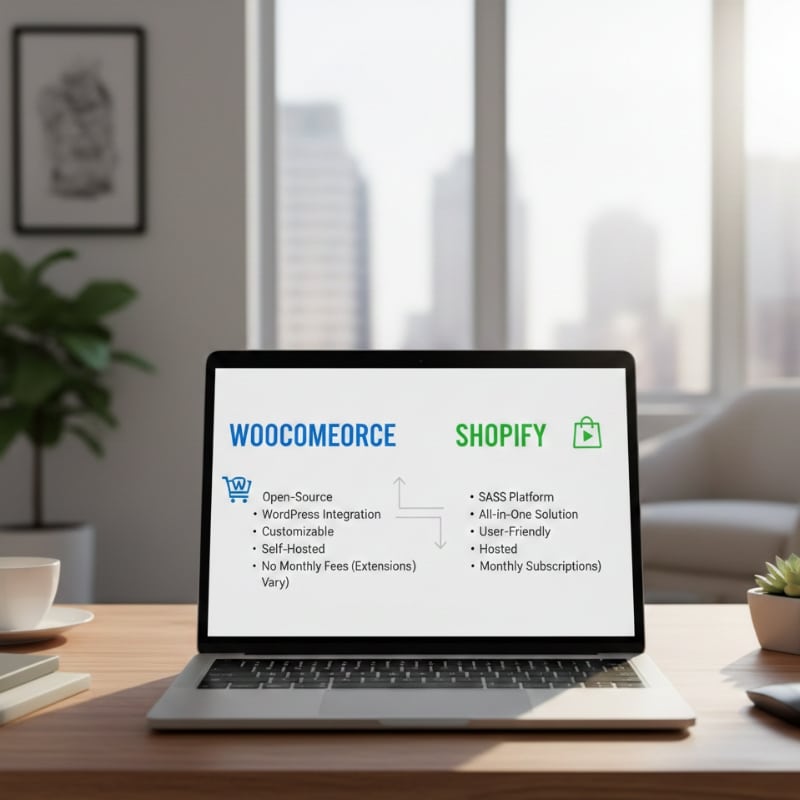
Quick Overview — WooCommerce vs Shopify in Australia
Before diving into the details, here’s a high-level comparison from an Australian small business perspective.
WooCommerce at a glance
- Built on WordPress
- Open-source with full ownership
- Highly customisable
- No monthly platform fees
- Requires hosting and ongoing management
Shopify at a glance
- Fully hosted SaaS platform
- Simple setup and management
- Monthly subscription model
- Limited backend control
- Transaction fees apply
Both platforms can support Australian businesses effectively — but they suit very different business models.
Cost Comparison — What Australian Small Businesses Really Pay
One of the most common questions is: Which is cheaper, WooCommerce or Shopify?
The answer depends on whether you’re looking at short-term simplicity or long-term control.
WooCommerce costs in Australia
WooCommerce itself is free, but there are associated costs:
- Web hosting (Australian-based hosting recommended)
- Domain name
- Premium plugins (payments, bookings, memberships, subscriptions)
- Ongoing maintenance and security
For most Australian SMEs, WooCommerce costs scale with your business, not against it.
Importantly, there are no forced transaction fees beyond standard payment gateway charges.
Shopify costs in Australia
Shopify uses a subscription model:
- Monthly plans
- Additional app fees
- Transaction fees (unless using Shopify Payments)
As your store grows, Shopify’s costs grow regardless of profit margins.
For businesses planning to scale, these recurring fees can quietly become a long-term expense burden.
GST, Tax & Australian Compliance
Australian compliance is one area where global reviews often fall short.
WooCommerce and GST handling
WooCommerce offers full flexibility for:
- GST-inclusive pricing
- GST-free products
- BAS-aligned reporting
- Custom tax rules by state or product type
With the right configuration, WooCommerce integrates smoothly into Australian accounting workflows.
Shopify and GST handling
Shopify supports GST but with less granular control.
While it handles standard GST scenarios well, complex pricing structures or mixed tax products can require workarounds or paid apps.
For businesses with advanced GST requirements, WooCommerce often provides greater transparency and flexibility.
For official requirements around charging and reporting GST when selling online, Australian businesses should follow the Australian Taxation Office guidance on GST for online sales, particularly when operating an e-commerce store.
Payments — What Works Best in Australia?
WooCommerce payment gateways
WooCommerce supports a wide range of Australian-friendly gateways:
- Stripe
- PayPal
- Square
- Afterpay
- Zip
- Bank transfers
There are no forced gateway choices, giving businesses full control over fees and customer experience.
Shopify payment gateways
Shopify Payments is convenient, but:
- Not all Australian businesses qualify
- Transaction fees apply if using third-party gateways
- Some payment flexibility is restricted
This can be limiting for businesses wanting tailored payment strategies.
Ease of Use vs Long-Term Control
This is where WooCommerce and Shopify differ most.
Shopify — simplicity first
Shopify is designed for ease:
- Quick setup
- Minimal technical management
- Beginner-friendly dashboard
This makes it attractive for first-time sellers or very small teams.
WooCommerce — control and flexibility
WooCommerce offers:
- Full ownership of your website
- Unlimited customisation
- No platform lock-in
- Control over performance, SEO, and functionality
While it requires professional setup, the payoff is long-term autonomy.
Many Australian businesses work with experienced WooCommerce and Shopify developers in Australia to ensure the platform is built correctly from day one.
Scalability — Which Platform Grows With Your Business?
Scaling with WooCommerce
WooCommerce scales well when:
- Hosting is optimised
- Performance is managed properly
- Plugins are chosen strategically
It’s particularly strong for businesses with complex product ranges, memberships, or custom workflows.
Scaling with Shopify
Shopify scales easily in terms of traffic, but:
- Costs rise quickly
- Customisation becomes restricted
- Advanced features often require expensive apps
At higher revenue levels, Shopify can become less flexible and more expensive.
SEO & Visibility for Australian Businesses
SEO remains a major growth channel for Australian SMEs.
WooCommerce SEO advantages
Because WooCommerce runs on WordPress, it offers:
- Full control over URLs
- Advanced on-page optimisation
- Superior content marketing integration
- Better long-term organic visibility
This makes it ideal for businesses investing in content and search visibility.
Shopify SEO limitations
Shopify performs adequately for SEO, but:
- URL structures are partially locked
- Blog functionality is basic
- Advanced SEO often requires apps
For businesses relying heavily on organic search, WooCommerce generally provides a stronger foundation.
You can explore a detailed WooCommerce vs Shopify comparison to understand how these SEO differences play out in real-world scenarios.
Which Platform Is Best for Your Business Type?
Shopify is often better if you:
- Are launching quickly
- Want minimal setup
- Have a simple product range
- Prefer predictable monthly costs
WooCommerce is often better if you:
- Want full ownership
- Plan long-term growth
- Require custom features
- Care about SEO and content
- Want control over costs
Businesses investing in professional eCommerce website design for Australian businesses often choose WooCommerce for its flexibility and long-term value.
AEO Section — Quick Answers Australian Business Owners Ask
Is WooCommerce or Shopify better for Australian small businesses?
Neither is universally better. Shopify suits simplicity, while WooCommerce suits flexibility, ownership, and long-term growth.
Which is cheaper in Australia long term?
WooCommerce typically offers lower long-term costs due to the absence of subscription and transaction fees.
Is Shopify good for Australian businesses?
Yes, particularly for startups and simple stores, but costs and limitations increase as the business grows.
Does WooCommerce handle GST?
Yes. WooCommerce offers full GST control when configured correctly.
Final Verdict — WooCommerce vs Shopify in 2026
In 2026, the decision between WooCommerce and Shopify comes down to control vs convenience.
- Shopify is fast and simple
• WooCommerce is flexible and future-proof
For Australian small businesses planning to grow, invest in SEO, and maintain control over their digital asset, WooCommerce often delivers greater long-term value.
The best results come from choosing the platform that aligns with your business model, not just your current size.